

HVAC system upgrades can do far more than replace an aging heating or cooling unit. Modern improvements can enhance indoor comfort, reduce unnecessary energy consumption, improve humidity control, strengthen indoor air quality, and make temperature management more consistent throughout a property. However, choosing the right upgrade requires more than simply purchasing the newest equipment. Homeowners need to evaluate current system performance, energy usage, insulation, airflow, equipment sizing, available technology, and installation requirements before making a major investment. From identifying early warning signs to comparing repair and replacement costs, planning home envelope improvements, and selecting qualified contractors, a thoughtful approach can help ensure that a new climate control system delivers lasting comfort and efficiency.
The modern comfort standard has fundamentally shifted. We are currently experiencing a golden age of climate technology, transitioning rapidly toward smart, high-efficiency, and eco-friendly systems that communicate dynamically with the environment. Today’s advanced heat pumps, variable-speed compressors, and sophisticated airflow management tools do more than just push hot or cold air into a room; they actively manage humidity, filter microscopic pollutants, and learn your daily routines to minimize energy waste. Upgrading your equipment is no longer just about replacing a broken box—it is a strategic investment that fundamentally transforms how a building feels and operates.
This guide serves as your comprehensive roadmap to navigating this major transition. Whether you are dealing with a system that is limping toward the end of its lifespan or you are proactively seeking to reduce your carbon footprint and monthly utility expenses, the information ahead will walk you through every critical phase. From performing initial diagnostics and calculating a sensible budget, to optimizing your home’s thermal envelope and selecting the perfect contractor for the job, you will gain the knowledge necessary to make informed, confident decisions about your indoor climate.
Evaluating System Performance and Spotting Early Warning Signs
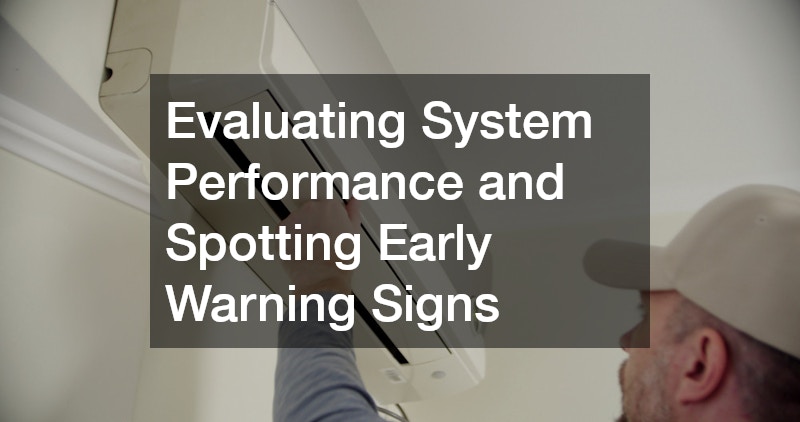
Before tearing out old equipment, it is essential to understand exactly how your current setup is failing. A systematic evaluation helps pinpoint whether you are dealing with minor inefficiencies or catastrophic systemic flaws.
Track Your Utility Bills
Your monthly utility statement is the most brutally honest diagnostic tool available. By analyzing year-over-year energy spikes, you can easily identify hidden system degradation.
-
Gather historical data: Pull your energy bills from the last three years.
-
Look for baseline anomalies: If your usage in kilowatt-hours (kWh) has spiked by 15% to 20% during identical seasonal weather conditions, your mechanical components are likely working twice as hard to produce the same results.
-
Account for rate changes: Ensure you are comparing energy usage, not just the total cost, as utility companies frequently raise their baseline rates.
When a standard air conditioning setup begins to lose its efficiency, it requires significantly more electricity to achieve the thermostat’s requested temperature, serving as an undeniable red flag that the equipment is wearing down.
Monitor Indoor Air Quality and Humidity
Temperature is only one half of the comfort equation; moisture control is the other.
-
Invest in a digital hygrometer: Place these inexpensive devices in central living areas. Ideal indoor humidity should hover between 40% and 50%.
-
Watch for extreme fluctuations: If indoor humidity climbs above 60% in the summer, your cooling coils are no longer effectively dehumidifying the air. If it drops below 30% in the winter, your heating method is aggressively drying out your environment.
-
Observe physical signs: Peeling paint, warped hardwood floors, and condensation pooling on the inside of windows are all visual indicators that your system is failing to manage moisture effectively.
The Airflow and Temperature Consistency Test
Hot and cold spots throughout a property are not inevitable; they are symptoms of poor distribution.
-
Use an infrared thermometer: Walk through your property and measure the temperature of the air blowing directly out of the supply registers.
-
Map the variances: A well-functioning system should deliver air at a relatively consistent temperature regardless of the room’s distance from the main blower. Variances of more than a few degrees indicate ductwork issues, failing blower motors, or severe airflow bottlenecks.
-
Check the return vents: Ensure that a piece of paper is easily held against the return grille by the suction. Weak suction means the system is starved for air.
Documenting Mechanical Red Flags
Machines communicate their struggles audibly and olfactorily before they fail completely. If you are constantly arranging for a costly AC repair due to strange mechanical behaviors, it is time to document these exact symptoms.
-
Listen for short-cycling: If the compressor turns on and off every five minutes, it is overworking and wearing down internal contactors.
-
Note unusual sounds: Grinding indicates failing motor bearings, squealing points to worn belts, and rattling suggests loose hardware within the blower assembly.
-
Identify strange odors: Musty smells indicate mold within the ductwork or drain pan, while an acrid, burning plastic smell requires an immediate shutdown as it points to melting electrical wires.
Calculating the Cost-Benefit Matrix of Fixing Versus Replacing

Once you have identified the symptoms of failure, the next logical step is deciding whether to salvage the existing unit or invest in a total replacement. This requires stepping away from emotion and applying strict financial logic.
Apply the “Rule of 5,000”
Industry professionals often use a standard mathematical calculation to guide property owners who are stuck on the fence. You can calculate this using the formula:
Age of Equipment in Years x Estimated Fix Cost = Total Value
If the resulting number exceeds 5,000, replacement is historically the wiser financial move. For example, if your system is 12 years old and the proposed fix costs 500 dollars, the calculation ($12 \times 500 = 6000$) strongly suggests that putting more capital into the aging machinery is a poor investment. Conversely, a 4-year-old system needing a 400 dollar fix equals 1,600, making an HVAC repair perfectly justifiable.
Assess Phased-Out Refrigerants
The type of chemical refrigerant cooling your home plays a massive role in the fix-versus-replace matrix.
-
Check your data plate: Look at the sticker on your outdoor compressor. If it lists R-22 (often known as Freon), you are operating on borrowed time.
-
Understand the phase-out: R-22 has been globally phased out due to its ozone-depleting properties. It is no longer manufactured or imported.
-
Evaluate the cost of recharging: Because R-22 supplies are strictly limited to reclaimed or stockpiled quantities, a simple leak that requires adding refrigerant can cost an exorbitant amount. In these scenarios, replacing the unit with modern R-410A or newer R-454B systems is vastly superior to patching a leak.
Factor in Modern SEER2 Ratings
Efficiency standards have evolved dramatically. Understanding the leap from older metrics to the modern Seasonal Energy Efficiency Ratio 2 (SEER2) is vital.
-
Compare the numbers: A unit installed fifteen years ago might operate at a SEER of 8 or 10. Today’s minimum SEER2 rating is over 13.4, with high-efficiency models reaching 20 or higher.
-
Calculate the payback period: Upgrading from a SEER 10 to a SEER 18 system can cut cooling costs by nearly 50%. You must calculate how many years of utility savings it will take to offset the initial purchase price.
Analyze Component Lifespans
Consider the interconnected nature of mechanical components. A single failing part often stresses the entire ecosystem.
-
Compressors vs. Capacitors: A blown dual-run capacitor is a cheap, routine air conditioning repair. A seized compressor, however, is the heart of the system; replacing it on an older unit is usually financially reckless.
-
The cascading failure effect: If you replace an expensive indoor evaporator coil on a ten-year-old system, the outdoor condenser is still ten years old. When the outdoor unit inevitably fails a year later, your new indoor coil may not be fully compatible with the replacement condenser, forcing you to pay for redundant labor and parts.
Maximizing Efficiency by Pairing New Equipment with Home Envelope Upgrades
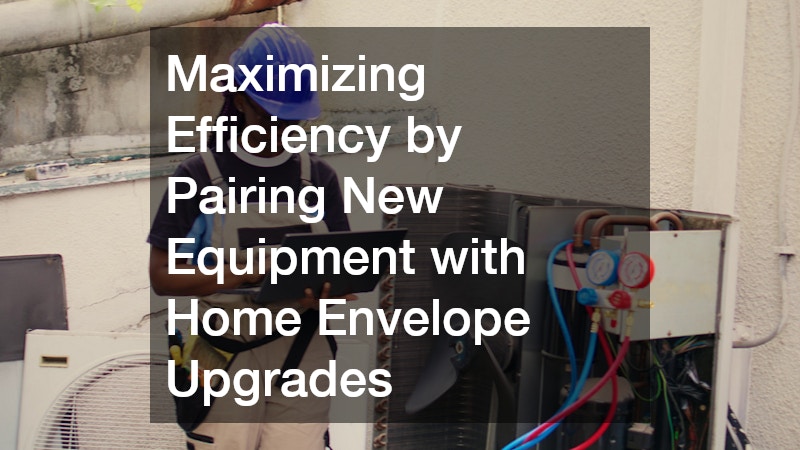
Purchasing the most technologically advanced machinery on the market will not solve comfort issues if the structural envelope of your building is compromised. Upgrading climate equipment should always be viewed holistically alongside the property’s thermal boundary.
Audit Your Home’s Insulation First
The thermal envelope consists of the roof, walls, windows, and foundation. If this barrier is heavily compromised, heated or cooled air will rapidly escape to the outdoors.
-
Inspect the attic: Heat rises, making the attic the primary culprit for winter heat loss and summer heat intrusion. Ensure you have the proper R-value of blown-in or batt material for your specific region.
-
Seal air leaks: Use weatherstripping around doors, caulk around window frames, and expanding foam around plumbing and electrical penetrations.
-
Hire a professional: It is highly recommended to bring in a specialized insulation contractor to perform a blower door test. This test depressurizes the house and pinpoints exact locations where conditioned air is bleeding out, allowing you to seal these gaps before sizing new mechanical equipment.
Size Your System Accurately
One of the most destructive myths in property improvement is that “bigger is always better.” An oversized mechanical unit is a disaster for efficiency and comfort.
-
Demand a Manual J Load Calculation: This is a complex mathematical assessment that factors in your home’s square footage, window orientation, building materials, local climate, and occupant count.
-
The danger of short-cycling: An oversized unit will blast the area with intense temperature changes and shut off quickly. Because it doesn’t run long enough to move air over the coils, it fails to remove humidity, leaving the interior feeling cold and clammy in the summer.
-
The danger of under-sizing: A system that is too small will run constantly, driving up electrical bills and wearing out parts prematurely without ever reaching the desired thermostat setpoint.
Explore Zoned and Ductless Technologies
If you are planning major upgrades, this is the ideal time to re-evaluate how air is distributed throughout the space.
-
Embrace Mini-Splits: Ductless mini-split systems are incredibly efficient. They allow you to mount individual air handlers in specific rooms, connecting directly to a single outdoor compressor.
-
Customize comfort: Zoned technology allows you to keep the master bedroom freezing cold at night while letting the unoccupied living room stay warmer, drastically cutting energy waste. These setups are increasingly becoming the gold standard for premium ac installations across the country.
Leverage Smart Thermostats and Automation
Hardware upgrades are incomplete without software upgrades.
-
Install learning thermostats: Devices like Nest or Ecobee analyze your schedule, learning when you leave for work and when you return, automatically adjusting temperatures to save money while you are away.
-
Utilize geofencing: By syncing the thermostat with your smartphone’s location, the system can automatically begin preparing the home’s climate when you cross a certain geographic radius on your commute home.
-
Monitor energy analytics: Smart thermostats provide detailed monthly reports on runtime, allowing you to visually see the return on investment of your new equipment.
Sourcing Trusted Contractors and Evaluating Detailed Quotes

The finest equipment in the world will perform terribly if installed incorrectly. The installation day is arguably the most important day in the lifespan of your mechanical systems. Vetting the professionals who will perform this work is paramount.
Verify Credentials and Insurance
Never rely solely on online reviews or word-of-mouth recommendations. You must independently verify a company’s legal and professional standing.
-
Check state licensing: Ensure the contractor holds an active, unblemished license with your state’s contractor board.
-
Look for NATE Certification: North American Technician Excellence (NATE) is an industry-recognized certification that proves a technician has passed rigorous knowledge-based testing.
-
Demand proof of insurance: Do not hire ac companies that cannot provide current certificates for both general liability and workers’ compensation insurance. If an uninsured worker falls through your attic ceiling, you could be held financially responsible.
Demand a Transparent, Written Scope of Work
A quote written hastily on the back of a business card is a recipe for disaster. You need a formalized, itemized estimate.
-
Detailed equipment lists: The quote should list the exact make, model numbers, and AHRI matching numbers of all components being installed.
-
Included peripherals: Ensure the quote explicitly covers the replacement of copper line sets, new thermostat wiring, drain pan upgrades, and the safe removal and disposal of the old equipment.
-
Permitting: The scope must explicitly state that the contractor will pull all necessary municipal permits and arrange for the final city inspections.
Compare Warranties and Maintenance Plans
Understanding how your investment is protected will save you thousands of dollars over the next decade.
Look for Rebate and Incentive Expertise
A highly competent contractor will help you navigate the financial incentives designed to make high-efficiency upgrades more affordable.
-
Federal Tax Credits: Under recent legislation like the Inflation Reduction Act, homeowners can claim significant tax credits for installing qualifying high-efficiency heat pumps.
-
Utility rebates: Local power companies often offer instant cash rebates for upgrading from older, power-hungry models. Top-tier providers of air conditioning services will usually handle the complex rebate paperwork on your behalf, applying the discount directly to your final invoice.
Managing Complex Demands: Large Properties and Specialized Heating
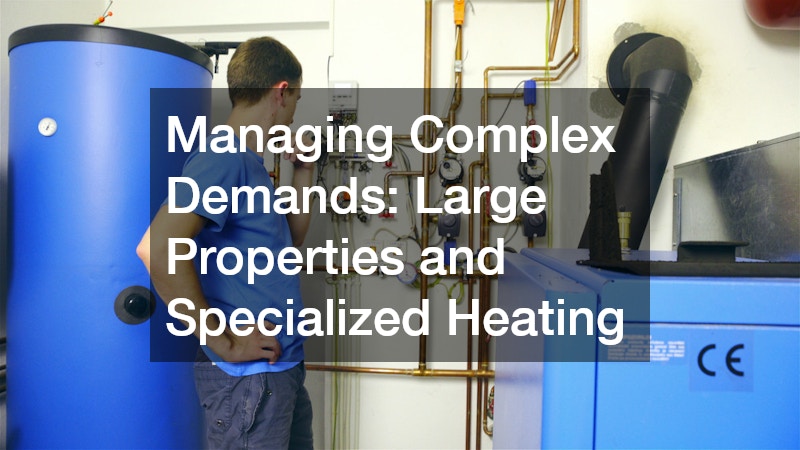
Standard residential guidelines do not always apply to sprawling estates, multi-family units, or industrial workspaces. Large-scale environments require highly specialized engineering to maintain safety, comfort, and compliance.
Scale Solutions for Workspaces
When dealing with business environments, the demands on mechanical equipment multiply exponentially due to occupant density, electronic heat generation, and strict building codes.
-
Rooftop Units (RTUs): These packaged systems house all components (compressor, condenser, and evaporator) in a single weatherproof box on the roof, saving valuable ground space and making servicing less intrusive to daily operations.
-
Advanced Ventilation: Workspaces require heavy fresh air cycling. Systems must be engineered with economizers that pull in cool outdoor air directly when temperatures drop, providing “free cooling” and flushing stale air from the building.
-
Partner with specialists: Sizing and implementing these systems requires contractors who specialize strictly in commercial hvac, as the electrical requirements and structural load considerations are vastly different from standard residential jobs.
Optimize Hydronic and Radiant Heat
Not all comfort is delivered through forced air. Properties utilizing water-based heating systems require their own unique upgrade paths.
-
The power of radiant floors: Upgrading to modern hydronic radiant floor heating provides an incredibly luxurious, even heat that doesn’t blow dust or allergens around the room.
-
Boiler efficiency: Older cast-iron boilers may be durable, but they are incredibly inefficient compared to modern modulating-condensing units, which can reach up to 95% AFUE (Annual Fuel Utilization Efficiency).
-
System flushing and upkeep: Transitioning to high-efficiency water heating requires pristine pipes. Before a new unit is installed, the entire network must be purged of sludge, rust, and scale. Committing to strict, annual boiler maintenance is the only way to protect the delicate heat exchangers inside these modern, high-efficiency marvels from premature corrosion.
Balance Indoor Air Quality (IAQ) Add-ons
For properties prioritizing absolute health and wellness, upgrading the main equipment provides the perfect opportunity to integrate heavy-duty IAQ accessories directly into the ductwork.
-
Energy Recovery Ventilators (ERVs): These devices pull fresh air into the building while exhausting stale air out. Crucially, they transfer the heat and moisture between the two airstreams, ensuring you don’t lose the energy you just paid to create.
-
Whole-building dehumidifiers: In deeply humid climates, a dedicated dehumidifier tied directly into the ductwork takes the latent moisture load off your primary cooling equipment, allowing it to run much more efficiently.
-
HEPA Filtration and UV Purifiers: Integrating hospital-grade HEPA filters and ultraviolet germicidal lights within the main plenum neutralizes airborne viruses, bacteria, and severe allergens before they can circulate through the property.
Conclusion
A successful climate control improvement is about more than replacing outdated equipment. Well-planned HVAC system upgrades can improve comfort, manage humidity, reduce energy waste, and provide more reliable performance when the equipment, building envelope, controls, and installation are considered together. Before making a major investment, establish a baseline of current energy use, identify existing performance problems, evaluate insulation and airflow, and determine whether repair or replacement makes the most practical sense. From properly sizing new equipment to considering zoning, smart controls, and indoor air quality improvements, each decision can influence the system’s long-term performance. Working with qualified professionals and comparing detailed proposals can also help ensure that the upgrade is installed correctly and delivers the intended benefits.